
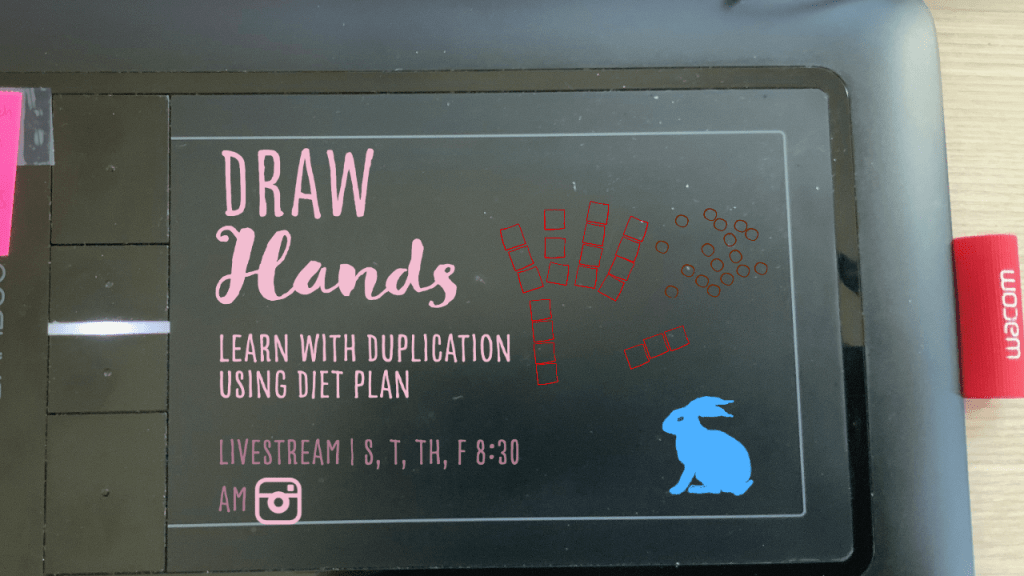
I’m getting an immense feeling with the new format for draw hands! Also, I think I’ll use this format in my new stories!
Draw Hands what you’ll learn?
- Diet Plan
- Process of drawing hands
- Filling different parts of the hand for understanding
- Organize folders
- Importance of a schedule
Host
Myself, Hi, Masters, you can call me Vye. Also, for now, I’m a conceptual artist & full-stack computer specialist. Under the name of Vyacheslav Kantor, I can tell you already delighted. 🙂
Would you be interested in connecting with me?
Resources
Draw Hands Podcast & Transcript

Draw Hands – 0:00
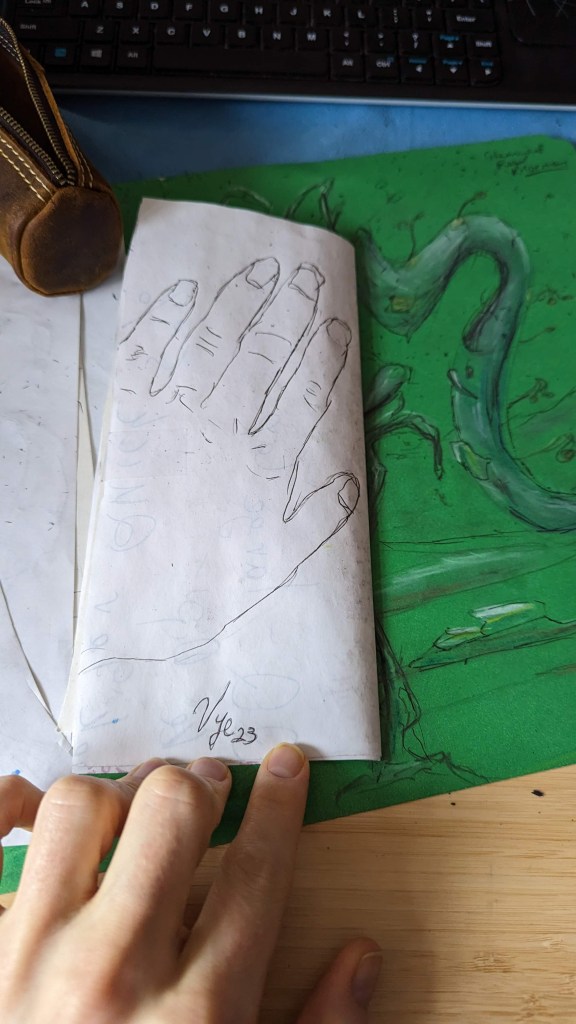
Hi Masters, How’s it going. Today I bring you duplication. As part of the diet plan, I do the live stream every week. There are four parts of this thing getting my notes out, so I like talk intelligently about it. There’s an invention, education, and tracing. Hand duplication was an hour sketch, which I speed it up, like, two times. So that’s what you see me doing. I replaced the audio with what you’re hearing today so that we don’t have to get the whole hour of you sitting here don’t want to waste your time. I put this together so that you can find the use of what is going on in this video here.
I have a lot of exciting things here. So let’s jump into it. I am looking at this hand duplication. We have little boxes scattered throughout the hand; what I was doing was trying to measure out how I can fill parts of the side. A big thumb little thumb, index finger, Pinky. So we take these boxes and try to arrange them around. So when I’m looking on the knuckles side, we’re looking on the palm side of the hand, so there’s like an extra skin. There are bumps and bruises, but we’re not concerned about that. Those things all draw our attention away. Here I’m just focusing on the silhouette and just putting the shapes and their respective spots throughout this video, which I don’t show here. It’s hard to see in this stream. I’m calling out different commands like a command. Let’s see my next command j command in the command something command this and that, trying to resize and adjust the boxes and fit them on each finger, while I’m doing this, and I’m also arranging my layers into folders, which helps a lot, in terms of putting things in. In order, so I can find them easily. So I would have my singles, my triplets: my doubles, all in their respective folders. Yeah, so let’s keep going and go into the second half of this stream.
Draw Hands – 4:24
You’re back to the second half of the stream. Just looking over my notes, and I have something written here that I like, or the wording of it that I want, lay of the land. I wrote here that it’s an idea what how the whole hand feels like the distances. So as I’m placing these boxes. I’m starting to understand, kind of like a map, like breaking down this thing. And like proportions you begin seeing and like maybe the thumb on the bottom right, you can see that, you know, takes up two squares versus one. So, okay, now we’re switching to another scan to see if that. But I think I’m looking for more references to get more ideas. So, it seems like I’m going to move on to using a skeleton. But I am going back to what I was saying. Want to go through all this stuff, and try to duplicate this on another day. And that would be your invention day is sit there for an hour and try to recall some of these distances and try to build up their library of what you’ve learned. So let’s write, real quick and move into the second half of this.
Draw Hands – 6:03
The third half. Here we are focusing on a skeleton hand. I’m using circles here instead of boxes or singles on the other side that I was working on rings are also another tool that you can use here. There are joints, so not getting like big on like covering a lot of space. So if you want to get more precise, that’s what circles will help me with. So I’m doing the same technique as before just laying out the singles and doubles and the quads, and positioning them near the joints, nothing particularly special to say about this. Still, it just makes it easier to arrange them and move them around. I think we are yeah we’re only about done here. If you stayed this long, thank you for visiting so long, you have any feedback or comments about this style, let me know.
I am looking forward to you. And additionally, I hope that you find this video useful, and hopefully, on your journey, while becoming an artist, you’ll find success.
4:24
You’re back to the second half of the stream. Just looking over my notes, and I have something written here that I like, or the wording of it that I want, lay of the land. I wrote here that it’s an idea what how the whole hand feels like the distances. So as I’m placing these boxes. I’m starting to understand, kind of like a map, like breaking down this thing. And like proportions you begin seeing and like maybe the thumb on the bottom right, you can see that, you know, takes up two squares versus one. So, okay, now we’re switching to another scan to see if that. But I think I’m looking for more references to get more ideas. So, it seems like I’m going to move on to using a skeleton. But I am going back to what I was saying. Want to go through all this stuff, and try to duplicate this on another day. And that would be your invention day is sit there for an hour and try to recall some of these distances and try to build up their library of what you’ve learned. So let’s write, real quick and move into the second half of this.
Draw Hands – 6:03
The third half. Here we are focusing on a skeleton hand. I’m using circles here instead of boxes or singles on the other side that I was working on rings are also another tool that you can use here. There are joints, so not getting like big on like covering a lot of space. So if you want to get more precise, that’s what circles will help me with. So I’m doing the same technique as before just laying out the singles and doubles and the quads, and positioning them near the joints, nothing particularly special to say about this. Still, it just makes it easier to arrange them and move them around. I think we are yeah we’re only about done here. If you stayed this long, thank you for visiting so long, you have any feedback or comments about this style, let me know.
I am looking forward to you. And additionally, I hope that you find this video useful, and hopefully, on your journey, while becoming an artist, you’ll find success.
Draw Hands – 4:24
You’re back to the second half of the stream. Just looking over my notes, and I have something written here that I really like, or the wording of it that I like, lay of the land. I wrote here that it’s an idea what how the whole hand feels like the distances. So as I’m placing these boxes. I’m starting to understand, kind of like a map, like breaking down this thing. And like proportions you start seeing and like maybe the thumb on the bottom right, you can see that, you know, takes up two squares versus one. So, okay, now we’re switching to another scan to see if that. But I think I’m looking for more references to get more ideas. So, it looks like I’m going to move on to using a skeleton. But going back to what I was saying. Want to go through all this stuff, and try to duplicate this on another day. And that would be your invention day is sit there for an hour and try to recall some of these distances and try to build up their library of what you’ve learned. So let’s write, real quick and move into the second half of this.
Draw Hands – 6:03
Finally, in the third half. Here we are focusing on a skeleton hand. I’m using circles here instead of boxes or singles on the other hand that I was working on circles is also another tool that you can use here. There are joints, so not getting like big on like covering a lot of space. So if you want to get more precise that’s what circles will help me with. So I’m doing the same technique as before just laying out the singles and doubles and the quads, and positioning them near the joints, nothing particularly special to say about this, but it just makes it easier to arrange them and move them around. I think we are yeah we’re just about done here. If you stayed this long. Thank you for staying so long, you have any feedback or comments about this style, let me know. Looking forward to you. And additionally, I hope that you find this video useful, and hopefully on your journey while becoming an artist, you’ll find success.


What’s Crackin’ \ (•◡•) /